thesis project: progress
- Rachelle Vassoler
- Jan 18, 2024
- 16 min read

Updated: Jan 18, 2024
Ideas:
For my thesis project, I wanted to create a concept that revolved around the idea of self expression. My first concepts stuck with this idea heavily and leaned into a very feminist stance, wanting to discuss the femal struggle with self expression in the eyes of society.
1) How societal expectations of women affect them
While feminism as a whole is a broad topic that can be explored and discussed in many different ways, I want to focus on the pressure to be socially acceptable with self expression and physical appearance. Women have faced this idea to always appear perfect on the outside physically, emotionally and mentally. Always told what to wear, how to wear it, and when to wear it. How to look and how not to look. And even if one doesn’t care about physical appearances and the expectations of others, there has always been this looming judgment from society weighing down on the lives of women of all ages.
2) how physical appearance is valued over personality and the individual
The world we live in is based on the concept that seeing is believing. We look at what’s in front of us and interpret it based on its appearance. While this makes sense, there is a large downside to this way of thinking. This can lead to many accusations and observations based on hostile stereotypes and therefore unjust conclusions. We are more than what we see, and who someone is runs deeper than just what’s on the outside. I want to focus on the harmful judgment society places on individuals to conform to a single ideal image. Our physical appearances are a form of self expression and limiting our capabilities to just what’s on the outside is harmful and outdated.
3) how the expectations of physical appearance affect the self esteem of women.
From girlhood to adulthood, one of the most defining aspects of being a woman is the pressing emphasis on upkeeping a perfect outward appearance. As a child, we are introduced to play makeup, princess dresses, an overstimulation of the color pink, and anything that sparkles. And from here we are conditioned to keep up this performance of being pretty until the day we die. The outward, societal perception of women is based solely on how they look and present themselves. To be a woman is to perform, and to perform is to conform.
Upon further feedback during critique, I was asked, "but what are you adding to these ideas?" This question had me stuck as I was unsure how to answer. While I enjoyed discussing and supporting the efforts of feminism, I realized I needed to add something of my own for this project. I continued to focus with self expression, but headed in a different direction afterwards.
I tried focusing more on makeup and the elaborate, artistic ways it can be used to express ourselves. I learned more into a "everyone is unique and different" direction and felt confident in my discoveries at first. With more critique, I came to realize originality isn't as original as it first seems. Today, more and more people are dressing and accessorizing in very different or even unconventional ways. While self proclaiming themselves as unique, this form of self expression has turned more into a trend rather than something unique to each person.
I was then interested in the idea that we aren't as original as we think we are. That these new trends are reminiscent on styles of the past and how clothing items that seem revolutionary, are nothing of the sort because it had already been done before. While still supporting my want to focus my project on self expression, I decided this direction would be best for my thesis. Because I was voicing an opinion, I now had something to add to the topic I wanted to discuss. So rather than talking about self expression by compiling the works of others, I was now taking a stance and allowing myself to communicate my personal thoughts.
thesis proposal:
first draft
For my thesis, I want to address the idea that we are not as original as we think we are. Throughout our fashion, makeup, and accessories, we constantly cycle through different trends, phasing items in and out, switching to something new and dropping the old once we get bored. At first glance, these trends make us feel unique, giving us a sense of newfound differency and individualism that separates us from everyone else. Yet at times, this is far from the truth. Most, if not all of these so-called original ideas are pulled directly from a place, culture, or time period of the past. The idea of beautification and accessorizing has been around for thousands of years, with a lot of ancient practices still being emulated and recreated today. Our fashion, make up, and accessories continuously borrow from the past while being molded into something new and attractive for the consumers of today’s world. In this project, I aim to emphasize the connections between our past and present while addressing the cyclical nature of beauty and fashion trends.
I want to execute this concept through creating an illustrative book or magazine layout containing collaged imagery or illustrations along with the necessary supportive text. Whatever format I choose, I want this to act as an informative guide both visually and textually, fully communicating my concept while representing it visually as well. While self expression and accessorizing ourselves makes us who we are, I want to address that these concepts are as old as time and how our “new” trends aren’t so new at all.
final thesis statement
Throughout our lives, we are constantly exposed to new clothes, makeup, accessories and trends. New products are placed in front of us and we pick and choose the ones that speak to us the most.
At first glance, the trends we indulge in make us feel different and unique as we try on new clothes and test out new styles. For thousands of years we’ve indulged in makeup and fashion that makes us feel unique and different, standing out from the rest. But when you really look into the origin of it all, it’s understandable to see how it’s all been done before. In a day and age where trends are constantly reimagined and nostalgia plagues our minds, it’s not hard to believe that our uniqueness is anything but that. We constantly reuse old ideas from those before us and market it off as something new. My goal with this project is to bring to attention our past and the influence it has on our fashion, makeup, and beauty industry of today. I want to bring to light how often we borrow from those before us to create something new every day. Focusing on the idea of the past, I want to explore how this concept affects the ideas of self expression and individualism as well as how we perceive ourselves in relation to it.
initial investigation and research ptI:
Because I wanted to draw a connection between the past and present, I felt gathering research on the beauty and fashion behaviors of ancient people would be a good place to start. Using history as a talking point would be beneficial as evidence through historical events can help benefit my purpose. I wanted to focus on fashion trends as well as self expression can depend on what's trending at the time. I researched how trends came and went and what styles were popular when. I felt having some background information on fashion from the last 100 years would be useful so I spent time looking into that as well. I started researching some reoccurring trends to decide what I wanted to use as a talking point as well.
Along with research, I created a mind map of additional ideas and thoughts:

Textual Research
Cosmetics in the ancient world
Summary: this article discusses the cosmetic practices of the ancient world. It includes Egyptian, Greek, Etruscan, Roman and Byzantine practices. These practices are described as beautification methods, religious practices, or ways of honoring their passed loved ones.
The history of fashion: from the 1900s to today
Summary: this article gives brief descriptions of some fashion staples from each decade from 1900 to present day. This gives a general idea of what popular fashion items came from which decade and can help later in tying together similar fashion concepts to each other.
Understanding the 5 stages of the fashion cycle
Summary: this article breaks down the structure of the fashion cycle and explains how trends fade in and out over time. The basis of my project centers around how ancient trends are recycled and repurposed in more recent fashions. Understanding the concept of trend cycles helps form my connections and broadens my understanding of how trends form, change, and dissipate over time.
A history of makeup
Summary: this article provides useful information about the history and meaning behind common makeup practices. Insight on makeup materials, purposes, and meanings are mentioned and gives a good amount of background information I can draw connections to. This article acts as a good basis for makeup history.
What is fast fashion and why is it so bad?
Summary: this article describes in detail the concept of fast fashion and the negative consequences it has on workers, the environment, and fashion as a whole. A historical viewpoint is also provided, stating how fast fashion came to be and what key factors most likely led to its creation. Better fashion alternatives are provided as well as ways to avoid fast brands altogether. I think this information is relevant to my concept as fast fashion is a quickly growing threat to fashion cycles as a whole. This information can support my research in the fashion industry as a whole and provide an educational point of view towards our constant need for new ways to accessorize ourselves.
Ancient beauty rituals: they did it first
Summary: this article acts as another source for ancient beauty trends organized into various cultures. Beauty concepts from ancient Greece, Rome, Egypt, and India are detailed here. This provides more historical information not seen in my other sources and helps draw more connections from the past to the present.
All the styles you once loved are suddenly cool again - Here’s why
Summary: this article addresses the fact today fashion is reminiscent of the past along with fashion items from various decades to support this claim. It mentions the 30 year fashion cycle and provides so background information that supports my claim. Fashion is forever cycling, we are constantly borrowing from the past.
Research
Cosmetics in the ancient world
The concept of vanity and improvement of appearance has been around since ancient times by both men and women
Parallels to today’s beauty concerns; curing wrinkles, baldness, gray hairs, anti-aging
Powders, creams, lotions, liquids
Key difference: some beauty techniques bore a cultural or religious meaning. Cosmetics and perfumes share close connection with burial practices, religious rituals
Egyptian culture
Egyptians were big on cleanliness and appearance, purity of body and soul had religious significance. Men and women made sure to look their best, especially in death.
Made a link between cosmetics and the divine. Makeup and oils were applied to statues of gods
Historical evidence found to support the use of makeup and cosmetics:
Visual records showing which parts of the face makeup should be applied to
Depictions in art of women applying paint to their lips
Eyeliner and eyeshadow were worn by royal officials, both men and women. Blush was also commonly found in ancient tombs.
They also used fats and oils as moisturizer. For beautifying as well as medicinal value
They also created remedies like pastes and creams to fight common beauty concerns like wrinkles, gray hair, and balding.
Greek culture
Kosmetika - referred to cosmetic preparations protecting hair, face, and teeth.
Perfumes have been used by the Greeks since the bronze age and had the consistency of a thick paste because of the oil base used at the time. Greek women used eyeliner, eyeshadow, eyebrow paint, rouge, and whitener to make the skin player. Men did not wear makeup, unless taking on a passive role in a homosexual relationship. Hair dye was used by both genders, meant to either darken or lighten the hair. Like the Egyptians, they also used face moisturizers and had solutions for common beauty problems. Exotic substances were used such as ash to clean teeth, snail ash to remove freckles, grease from sheep’s wool as face cream, and excrement from lizards was used to reduce blemishes and reduce wrinkles.
Sometimes stated cosmetics were used by lower class women and prostitutes, yet all women, single or married, rich or poor took part in the beautification
Best cosmetics and perfumes were reserved for tombs
Roman Culture
Cosmetics were used by women, men were ridiculed for spending too much time on their appearance. Similar to speculation in the Greek world, writers thought of makeup as a practice of prostitutes, yet just like the Greeks, all kinds of women used cosmetics. Perfumes had a wide array of effects. They were used to enhance experiences, like public baths and to enhance the flavor of wine.
Cosmetic innovations: Donkey’s milk as skin softener
Creams used to help complexion as health benefits
Also had creams to whiten the face
The history of fashion: from the 1900s to today
1900s
American women wore tailored blouses and skirts, corsets were worn underneath.
Men wore different coats depending on the time of day, they wore tight fitting tailored pants and dress shirts that buttoned up the back.
1910s
big hats with large brims were popular with women. Skirts and coats were narrow at the ankle and high heels were popular.
Suits increased in popularity for men as well as blazers. Pants were ankle length and cuffed
1920s - in general, fashion started leaning to a more casual appearance.
Women wore casual dresses patterned with vertical stripes, gingham, plaid, and solid colors. Most common, is the flapper style worn by women wanting to attract attention
Men still wore suits, but the rise in sports gave rise to sportswear. Sweaters and sweater vests took the place of suit jackets.
1930s - fashion was influenced by movies from the time period.
Women grew their hair longer and wore patterned dresses, mainly of florals. Makeup and curling irons were essential.
Men wore sports suits and fedoras, except for those less fortunate. Men who couldn’t afford suits wore work clothes. Trench coats became popular.
1940s - 40s fashion had many restrictions because of the war.
Cotton, rayon, and nylon replaced the silk women’s clothes were previously made of. Jacket’s blouses, sweaters, and skirts became popular. Dresses were casual and pants became a staple.
Men’s suits could be bought without waistcoats and cuffed pants were still in. Through the decade, coats became looser and longer.
1950s - designers Christian Dior, Cristobal Balenciaga, Charles James, and Hubert de Givenchy rose in popularity
Women were interested in sportswear and occasionally wore pants. In the past, it was only dresses
Mens fashion continued on the casual route. Influenced by Marlon Brando and James Dean, a white shirt, jeans, and leather jacket was the most popular and well known look of the time. It was seen as rebellious for the time.
1960s
Early 60s - Women wore tailored skirts, high heeled shoes and “shift” dresses. Pants were seen often as it was more acceptable
Late 60s - the rise of the hippie movement led to a drastic change in fashion and became a well known fashion movement because of it. Both men and women wore styles with peace signs, tie-dye, and bellbottoms. Freedom of expression and free love were highly emphasized
1970s - hippie style from the late 60s continued on into the beginning of the 70s
Midi skirts and maxi dress became popular along with headbands, chokers, scarves, and jewelry made of wood, feathers, and stone
Men continued wearing bell bottoms along with satin shirts as well as flannels and tie-dye. Bright colors were starting to be seen in mens fashion
1980s - fashion in the 80s was heavily influenced by TV shows, movies, music videos, and celebrities. Versace, Christian Lacroix, and Chanel were known for formal wear. Ralph Lauren, and Calvin Klein were known for casual wear and specialized in jeans
Bright neons were found on women’s dresses and designer underwear became fashionable. Casual and exercise clothing was popular
Men wore suit jackets and casual t-shirts. Leather jackets and jeans were often seen and raybans grew in popularity
1990s - the 90s expanded on fashion trends of the past. In the middle of the decade, women wore clothes reminiscent of the 70s. Denim and flannel shirts were seen often. Versace, Guess, and Tommy Hilfiger became popular as the media was focusing on fashion and supermodels much more
The 2000s - fashion began being promoted online with the rise of the internet as well as fast fashion
Early 2000s - boho fashion, asymmetrical tops and skirts, and maxi skirts were popular
Late 2000s - hipster fashion became popular, influenced by social media platform Tumblr. Fast fashion brands Zara, Forever 21, and H&M surrounded and shaped fashion of the time.
2010s - fashion became more and more casual. Jeggings were popular in the beginning of the decade as well as “athleisure”. Street style gained traction with the rise of social media. Towards the end of the decade, brands shifted focus on inclusivity and diversity.
Fashion today - today, fashion is heavily influenced from decades of the past.
Understanding the 5 stages of the fashion cycle
Fashion trends are cyclical and move through a five stage cycle. Once reaching peak popularity, a trend declines and is eventually considered obsolete, being rejected by consumers and the fashion industry. Because it’s a cycle, fashion can re enter into popularity and start the cycle again.
The fashion cycle - introduction, increase, peak, decline, obsolescence
Introduction - when a new style first enters the fashion world. Can be part of a new haute couture design during fashion week, worn by a well known individual or introduced by a marketing agency or manufacturer. Produced in small quantities from a handful of retailers for a high price.
Increase - “fashion acceptance stage” is when a style gains traction in the fashion world and receives the trend label. Social media influencers and celebrities begin incorporating these items and in return, more retailers begin to carry these styles
Peak - the trend has reached full saturation in the public and everyday consumers adopt the trend and are commonly seen wearing it. Most retailers recognize the trend and mass produce it, being offered at many price levels, especially on the lower end.
Decline - the trend is now oversaturated and its intense popularity turns away consumers who are looking for unique rather than mainstream.
Obsolescence - once reaching the end of the cycle, the trend is considered outdated and out of style by mainstream fashion wearers. They’ve begun to move onto other trends in their introduction and increase stages. Just because an item is at the end of its cycle, it doesn’t mean it won’t be seen again. “The cycle is in a constant state of repetition, bringing back “old fashions” to send them through the movement of fashion. For example, the life cycle of jean waistlines: high-waisted jeans saw peaks in popularity during the 1940s, the late 1970s and early 1980s, and the 2010s, while low-waisted jeans saw peaks in between these years, in the 1960s and late 1990s through the early 2000s.”
A history of makeup
In ancient Mesopotamia and Egypt, wealthy people wore makeup as a marker of their status and believed it made them more appealing to the gods. Eyeliner is seen as the oldest form of makeup, with men and women from both cultures wearing kohl around their eyes. Eyeliner, while making the eyes appear larger, also served as protection from the sun. in Egypt malachite eyeshadow represented Gods Horus and Re and made the eyes appear larger just like eyeliner. Ancient Chinese women used rice powder to make their skin appear lighter and adorned their faces with floral patterns made from silver or gold flakes, jade, and other jewels. In ancient india, certain makeup was reserved for spiritual practices. They also utilized similar eye liner and skin lightening practices of Egyptian and Chinese cultures. Instead of suing kohl as eyeliner, Indians had a special ritual to create eye makeup. They would dip a muslin rag in sandalwood, let it dry, burn it, and mix the carbon remains with ghee for easy application.
Ancient beauty rituals: they did it first
Greek culture: Ancient Greece idealized physical beauty, they were in touch with the again process, and were always seeking new ways to improve their appearances. Aphrodite, the goddess of love and beauty created a beauty ideal among women and fueled their ancient beauty rituals. “The Greeks favored light complexions, which they maintained using white lead. This was later replaced by chalk powder (around 1000 BCE) due to the many deaths caused by slow lead poisoning. Crushed mulberries were used for lip and cheek stains, as was clay and red iron for lip color. Dark eyeshadows were also favored, made using a mixture of charcoal and oils. Fake, thick and prominent eyebrows were made with the hair of oxen. Oftentimes, women even preferred connected eyebrows (unibrows), as this was admired in their culture.
Romans culture: Romans participated in elaborate bathing rituals and were known for their extravagant bathhouses, similar to the spas of today. Bathhouses contained mosaic, murals and an intense amount of perfume fragrances. Romans also preferred very white complexions similar to the Greeks and utilized many ingredients for cheek color, or rouge. “Other unique rituals included using barley flour and butter to soothe skin. Nail color was made using animal fat and blood, creating a pink and red tint.
The fall of the Roman Empire nearly caused the “vanishing” of all cosmetics, and it became very uncommon to wear make up there for a bit. But around 1200 AD, makeup was slowly reintroduced into the culture and the beauty rituals lived on.”
Egyptian Culture: Egyptians were known for their avant garde styles, as they took fashion and beauty pretty seriously. Exotic jewelry, headdresses, and hairstyles were seen often along with eyeliner, eyeshadow, and lip colors. Uncovered burial sites were discovered with remnants of cosmetics inside. Makeup was of such an importance to them that their beauty rituals served as an honor to their gods and goddesses. “Cleopatra, the last active pharaoh of Egypt, was a legendary beauty, leaving behind timeless rituals with her legacy. Almond oils, apple cider vinegar, dead sea salt scrubs, honey and milk baths were among some of her anti-aging rituals.” Perfumes, moisturizer, and hair removal techniques were all seen in Egyptian culture as well.
All the styles you once loved are suddenly cool again - Here’s why
Fashion has taken a more nostalgic turn, with styles from past decades making a comeback. This return of past styles is nothing new, as fashion tends to re-cycle about every 30 years.” In the late '90s and '00s, many of the most popular trends were actually just reimagined versions of styles from the '60s and '70s. The bell-bottom craze fed into the rise of flared jeans, mod-style hats into bucket hats and so on.” "What we’re seeing on runways today falls right in that cycle," Newberger said. "While we reimagined the '60s and '70s in the '90s and '00s, today we’re seeing Gen Z reconceptualize those looks."
2000s trends seen today - low rise jeans, velour tracksuits, cargo pants, claw clips, wide, straight leg pants, bucket hats
80s - puff sleeves, high-waisted bike shorts, high waisted jeans, windbreakers, bright bold colors
research ptII:
additional research gathered over the second half of the semester
Source: https://corset-story.co.uk/blogs/news/the-history-of-corsets#:~:text=The%20corset%20concept%20was%20introduced,to%20the%20 female%20 figure%20 attractiveness.%22
The History of Corsets - A journey Through the Ages
This article provided detailed background information describing the origins and changes the corset went through over time. Reading about the changes this item went through helped provide insight into the way an unending trend functions.
Low Rise Jeans are Back and They’re Surprisingly Wearable
This article provided the background information I was looking for when researching this trend. It helped me better understand its background and the way this trend was resurfacing from not so long ago.
The Influence the Hippie Era had on Fashion
This article provided the information I was looking for as well as new information I hadn’t been aware of. It helped me understand how styles can inspire future fashion trends and just how influential this era in fashion was.
How the 1980s are Influencing 2023 Fashion Trends
This article talks about the nature behind 20-30 year trend cycles and provides useful information on how and why trends resurface the way they do.
How do Fashion Trends Start?
This article explains how trends come to be and the role celebrities, the runway, and street fashion all affect the way trends work. This provided useful background information for writing the text for my project.
DIY Staple Saddle Stitch
This youtube video acts as a great visual tutorial for securing a booklet with staples rather than physical stitches
Step by Step Saddle Stitch Binding
This youtube video is an extensive in depth tutorial on how to stitch a booklets with needle and thread. I think I liked this method the most as the physical stitches coincide with visual elements utilized in my project.
visual inspiration:
Before starting my design, I created a collection of artwork and design examples that I was interested in. I was heavily inspired by the cut and paste collage compositions seen below. I thought about using fashion models as a way to convey my concepts in certain spreads. I saw the way text interacted with the imagery and decided a illustrative yet informational photo booklet would be a good way to go.
pinterest board contain more inspo:





Because of my focus on fashion, trends, and self expression, I thought using imagery of fabric and threads/stitching would be interesting. Fabric unassociated with clothing could represent the possibilities that come with the way one expresses themselves while threads can act as way to physically represent the connection being made between the past and the present. I used some scrap fabric I had and created some stitches with my sewing machine. I also took pieces of fabric to the scanner bed of my printer to see what results I could get
raw images of scans:


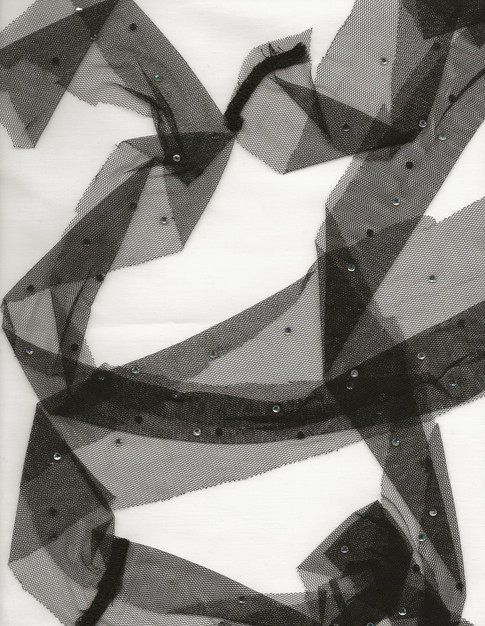





scans of stitches on fabric:


based on my initial ideas, I sketched some potential layouts before digitizing anything.


design stage I:


After establishing the flow of my first couple pages, I followed this design for the final version as well as my poster concept.

Comments